![]() |
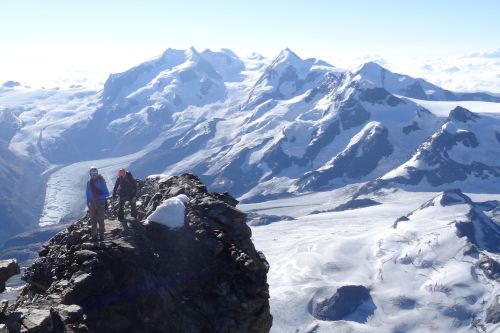
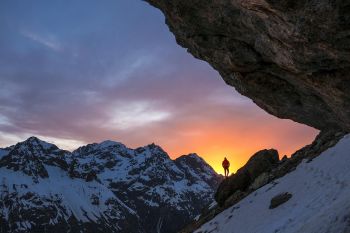
Stretching from the Saas Valley in the east to the Grand Combin in the west, the Valais Alps provide by far the greatest number of alpine 4000m peaks and probably the greatest concentration of 'traditional' mountaineering anywhere in the world.
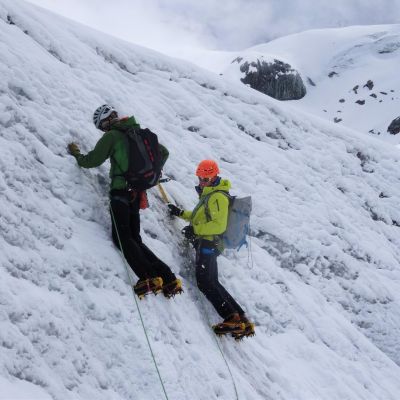
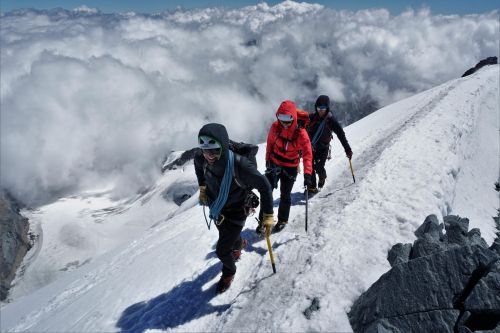
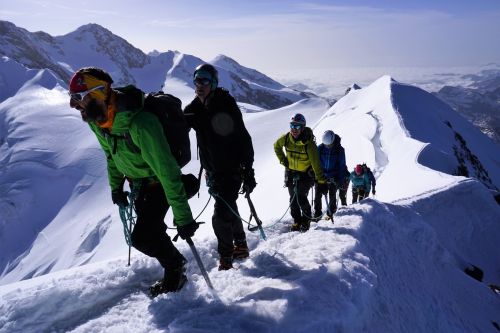
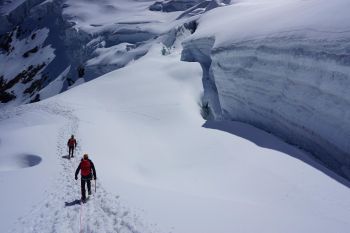
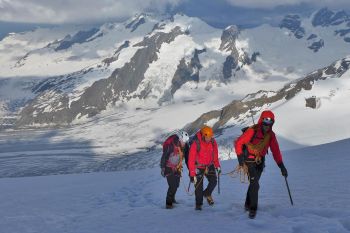
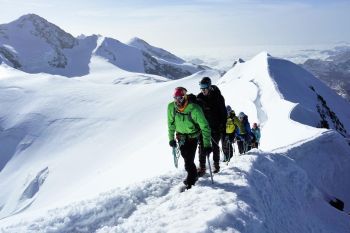
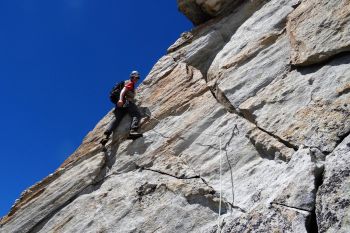
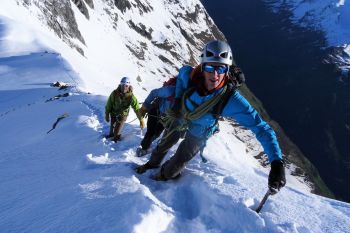
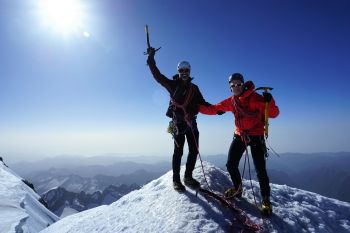
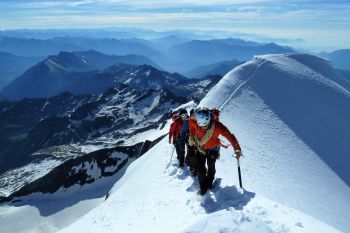
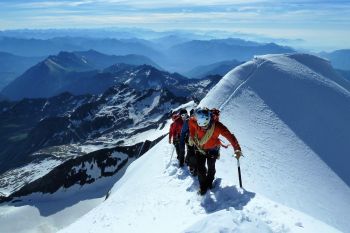
This course is a week spent climbing the more technical of these magnificent four-thousanders, via some of the most famous and sought after routes in the Alps. Many of these are lengthy undertakings with challenging technical climbing, but are nonetheless very achievable objectives for keen amateur mountaineers. The peaks are invariably big, strenuous undertakings, often with lengthy approaches, and we would normally climb two in a week plus an acclimatisation peak. We like to visit two different alpine areas, giving extra interest and variety to your alpine holiday. You will need to have previous alpine experience and a good level of fitness for this course (which is one of the most challenging offered by ISM). We climb on a low 2:1 guiding ratio, which gives us flexibility to match levels of experience and fitness within the group - and to tackle some demanding routes. Climbs on this course range from PD+ to D (mostly AD) and many of them are committing undertakings at high altitude. Please be sure to detail on the booking form your previous experience and especially any peaks climbed in this region, so that we can plan the best possible itinerary with objectives that are new to you. Who the course will suit Previous alpine climbing experience is necessary (to the level of our Technical Alpinism course or equivalent). Participants should be comfortable climbing to grade IV on rock (British Severe, American 5.5) and have experience climbing with boots and rucksack. Although most of the routes climbed are ridge climbs, some experience climbing with two ice tools on moderate routes (Scottish grade II and III) is also desirable. Good fitness and stamina is essential. On this course especially, some prior acclimatisation would be advantageous. Peaks that can be climbed on this course
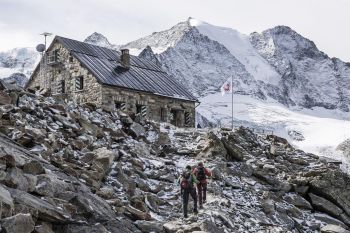
Typical course programme This is a sample programme of this course as many different combinations of peaks and climbs are possible. Saturday evening. The course starts with participants and guides meeting at 7.00pm at Le Grand Chalet hotel in Leysin. This is the chance for the guides to give a thorough briefing and discuss the detailed plan for the week with you. Sunday. In the morning, we check gear and then travel up the Rhône valley to Visp and on to Zermatt. The walk-in to the Rothorn hut is relatively long and strenuous, starting steeply out of the valley until we arrive at Trift (where there is a welcome café and lunch stop). From here, we continue up more easily with a final steep section up to the hut. It is normally a 4-5 hour walk. Monday. There are two excellent options for acclimatising and refreshing alpine skills. One is the Wellenkuppe (3903m, PD) which we climb if plan to attempt the Zinalrothorn from the Rothorn hut next day. If settled weather is forecast and we plan to traverse the Zinalrothorn from the Mountet hut, we make a traverse of the Trifthorn (3728m) via the superb South Ridge (pitches of II+).
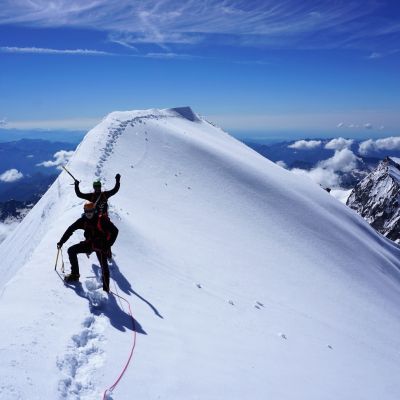
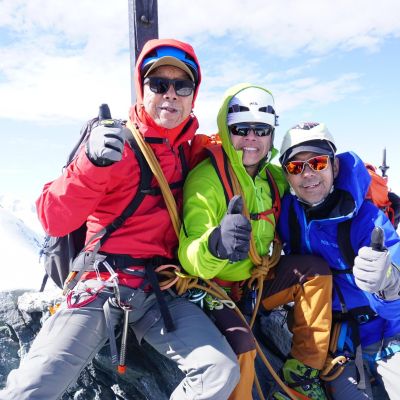
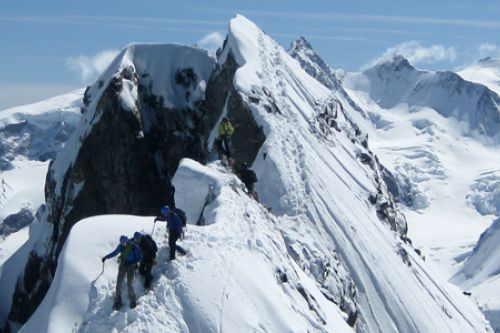
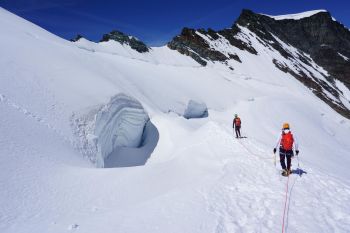
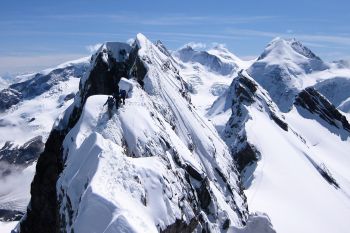
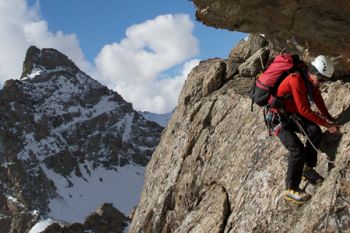
Tuesday. The two possible routes on the Zinalrothorn are both first-rate excursions. The normal route from the Rothorn hut (AD-) climbs via the SE ridge and crosses to the SW ridge just below the infamous Biner slab (III-) which is climbed to the superb rock spire summit. The route from the Mountet hut is a traverse - ascending via the N Ridge over famous features like the 'Rasoir', the 'Sphinx' and the 'Bosse' then descending by the normal route. Yet another option from the Rothorn hut for strong parties is the Rothorngrat (D), which rises steeply from the Ober Rothornjoch and is one of the best routes anywhere in the Alps, with pitches to IV+ on superb granite. In either case, we descend via the normal route to the Rothorn hut and continue down in the afternoon for a well-earned rest and night out in Zermatt. Overnight hotel. Wednesday. The plan for the second half of the week will usually be decided on Tuesday evening in the light of the latest weather forecast and your preferences. It is often nice to switch valleys, perhaps moving further west to attempt either the Dent Blanche or the Meitin Ridge of the Grand Combin. In this example we opt for the Dent Blanche and drive for 1 hour around to Ferpecle at the head of the Val d'Herens. The Cabane Dent Blanche is very high (3507m) and consequently has a long approach (5hrs) through some spectacular glacier scenery in the upper part. Thursday. The South Ridge of the Dent Blanche is one of the great mountain days of the Valais Alps. Dawn breaks as you reach the base of the ridge to reveal fantastic views of the North face of the Matterhorn and the Tete de Lion. The climbing is mixed snow and rock as far as the Grand Gendarme, an impressive slender tower which blocks the ridge. It can be climbed direct in good conditions (IV) or passed on the left if there is a lot of snow. Above, the climbing is continuously interesting, snow crests alternating with steep rock bands and towers, till an easier snow ridge leads to the summit cross. Descent is as demanding as the ascent and takes about the same time, making a 10-12 hour day hut to hut. Friday. A descent of the Glacier des Manzettes is an interesting alternative to the approach path and gives a chance to run through any skills people might want to refresh. After lunch in Ferpecle head back to Leysin, perhaps stopping for a rock-climb en route if time permits and you are keen. After debrief and dinner at the Grand Chalet hotel we enjoy a few evening drinks with other ISM course members and guides at the Yeti bar. Saturday morning. Breakfast at the hotel is included before departure.
|
|
| |
| |
||||||||||||||||||||||||||||||||||||||||||||||||||||||||||||||||||||||||||||||||||||||||||||||||||||||||||||||||||||||||||||||||||||||||||||||||||
|
||||||||||||||||||||||||||||||||||||||||||||||||||||||||||||||||||||||||||||||||||||||||||||||||||||||||||||||||||||||||||||||||||||||||||||||||||||||||
Home | About ISM | Book a Course | News & Reports | Sitemap | Links | Contact ISM |
|||