
Some Tips for the First Time Outdoor Boulderer
ISM instructor and avid boulderer, Dave Heaton shares some things to know when just starting out bouldering.
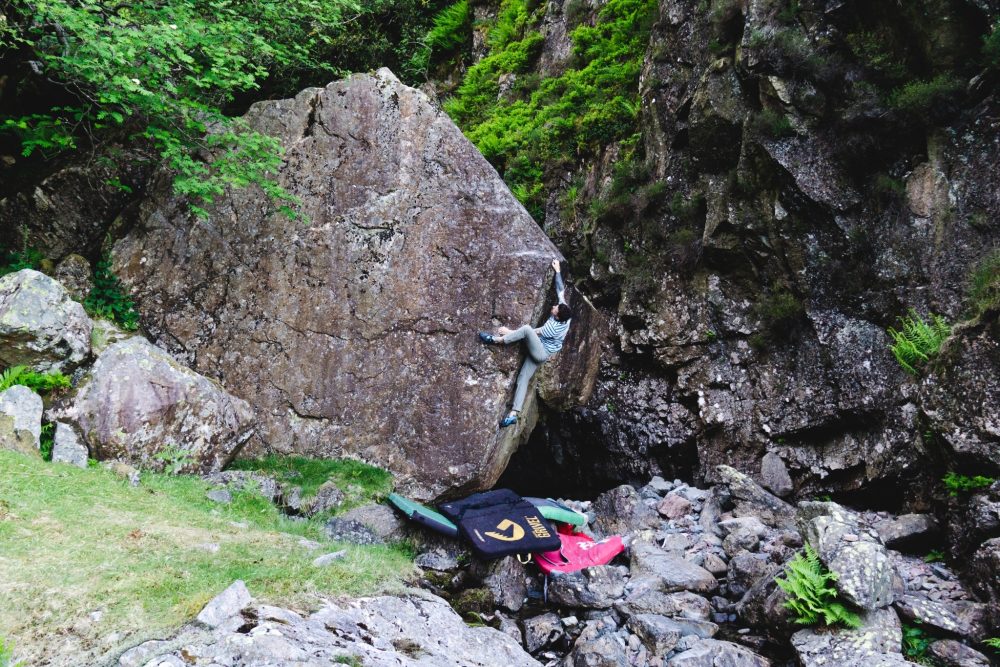
1. Warm up and stay warm
If you’re like me, you’re probably a little lazy when it comes to warming up at the climbing wall. Usually i’ll spend a few minutes with a stretch band and then jump onto some easy boulders. But outside it’s not that simple. It’s easy to convince yourself you’re warm if you’ve spent half an hour walking into the crag and you’re sweating, but your fingers that have been carrying the pads might still be freezing. On rock it can be harder to find jugs to pull on and you’re forced to start your climbing on smaller, sharper holds than you usually would.
To ensure that my fingers and shoulders are warm, and therefore my risk of injury is lower, I take stretch bands and a small wooden edge to the crag with me. I’ll spend at least 20 minutes working on my shoulders and fingers until they feel warm and like they’re moving well. If there’s something to hang the edge on, I’ll gradually work up some resistance before hanging body weight off the edge.
2. Check the landing
Once you’ve scoped where the problem goes, spend some time working out where you’ll land if you come off. What’s below the problem? What might injure you? What’s the best configuration for your pads?
3. Check the descent
Not every boulder is the Bowderstone (it has steps off the top). It’s a pretty rubbish feeling when you get the buzz from completing your boulder only to realise that you’re stuck on the top, particularly if you’re on your own. When you arrive at the boulder and find your problem, take a minute to walk around and find the best place to descend. This might even involve sacrificing one of your pads for the descent.
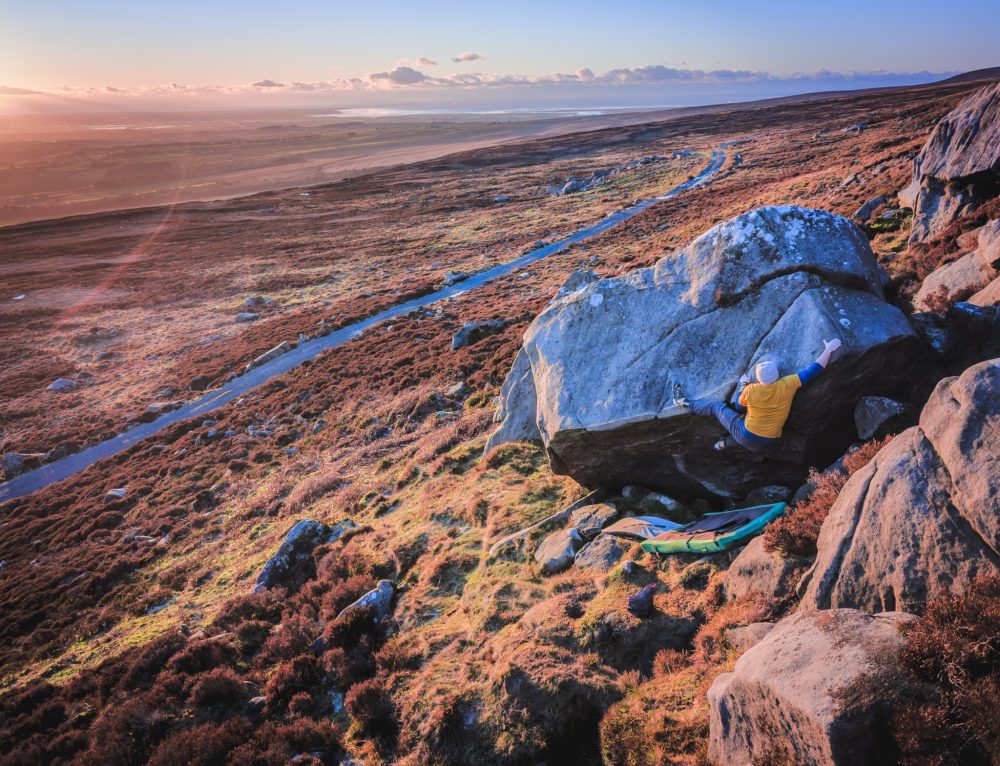
4. Bring spotters
Friends, climbing partners, human crash pads, call them what you like. Having other people with you, who’ve genuinely got your back, will save you from bad injuries. I’ve suffered broken ribs and badly sprained ankles from falling when bouldering on my own. If you have someone there to spot you, make sure they’re stood in the right place, they’re moving the mats when they need to and they’re focused on you when you’re climbing.
5. Clean up after yourself
It goes without saying, but leave the crag the way you would want to find it. Take all your litter home, this includes those little bits of finger tape. If you tick mark the holds, brush them off before you leave.
6. Keep your shoes clean
Try to take your climbing shoes off if you’re stepping off your mats. If you’ve got a bit of mud or water on your shoes, at best you’ll just pop off your problem, at worst you’ll take a fall and get injured. Bring a little towel to dry your shoes and check them before every attempt.
7. Rest
You’ve just got to your high point and fallen off. You’re psyched, it feels like it’s going to happen this session. You jump straight back on and don’t get anywhere near as far. Sound familiar? Rest is crucial to recovery and giving yourself the best shot of completing your project. A good rule of thumb is to rest for a minute per move just completed. I.e. you climbed five moves, so you rest for 5 minutes before another attempt. In reality you might need a lot longer if the problem is particularly burly. Sometimes I bring a book with me and set myself the rule that I have to read a page for every move made on my project.
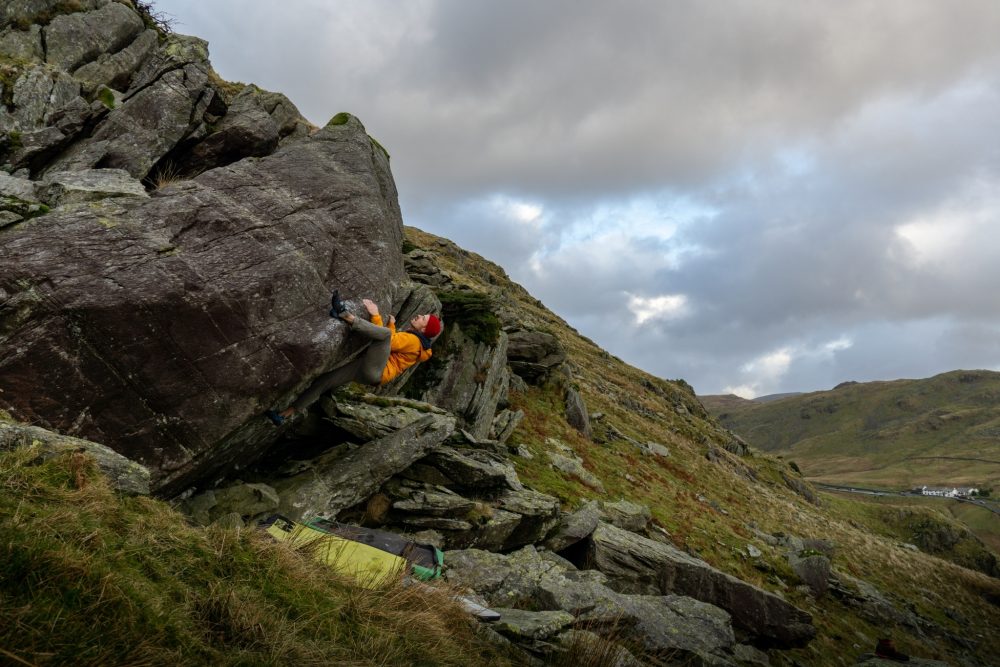
8. Look after your skin
Sharp holds, coarse rock and tired arms can all play a factor in how long your skin lasts. If you’re not resting properly you’re likely to start throwing for holds that you may be able to reach statically when fresh. If the holds are sharp or the rock is rough you could well end up tearing your skin. Once the tips go through and start bleeding your day is over. Rest, use tape, change the style of problem if it’ll help you to preserve your skin.
9. Respect others
Bouldering can be one of the most sociable forms of climbing. I frequently find myself chatting to people who I’ve just met at the crag and often we’ll end up spotting each other and sharing beta. Unfortunately, I’ve also had days ruined by climbers playing loud music, screaming obscenities and smoking weed right next to me. Get chatting to those strangers at the crag, check in with what they’re okay with before you put your music on.
10. Respect the rock
It goes without saying that we need the rock! But certain actions we have as climbers damage it. We need to limit this as much as possible if we want to keep enjoying our favourite crags. Avoid climbing on wet rock, particularly sandstone and grit as it becomes much more fragile. Keep tick marks to a minimum and brush them off before you leave. Don’t use wire brushes on existing problems or soft rock.
Bonus Point
Take the time to enjoy where you are. It’s easy to get really focussed on the problem in front of us but so often bouldering takes us to beautiful places. Soak up the scenery and embrace where you are, even if it’s a grotty little quarry somewhere.
Related News Articles
Getting Into & Developing Your Climbing
Indoor bouldering is a great place to start if you want to try climbing for the first time. You can…
Read Article
Petzl 'Alpen Adapt' Crampons
A quick look at the Petzl crampons that I'm using at the moment, and how you can very easily mix…
Read Article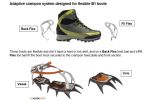
Petzl Crampon Compatability
Mix & match the different Petzl crampon sections, to create the best fit for your boots, and adapt to each adventure.
Read Article
Prussiking Up A Rope
Following the recent articles around crevasse rescue and snow belays, I wanted to finish up by outlining a standard technique…
Read Article