KYRGYZSTAN 2026 – THE TERSKEY RANGE
An ISM Virgin Peaks Expedition to Kyrgyzstan story by ISM Mountain Guide Tommaso Dusi
Chapter 1: Leading an Expedition
“Hello Tom, would you be keen to lead our 2026 Virgin Summits Expedition to Kyrgyzstan?”
That was the question Adrian, director of ISM and leader of many expeditions to this remote country, put to me.
In almost 20 years working as an IFMGA Mountain Guide, I've organised many trips around the world and taken part in expeditions to places including the Himalaya and Patagonia.
I'd also been to Kyrgyzstan four times with Adrian.
But leading an expedition? That's something completely different!
Metaphorically speaking, you're the skipper of a sailing boat. You need to keep the crew working together, make decisions about your route depending on the wind and weather, and take responsibility for everything that happens along the way.
Sometimes you don't even get the chance to do your favourite thing — climbing mountains — because you're too busy dealing with everything else!
Despite all that, I was honoured by Adrian's proposal.
And absolutely convinced I wanted to accept!
Chapter 2: Karakol, Little Switzerland and New Roads
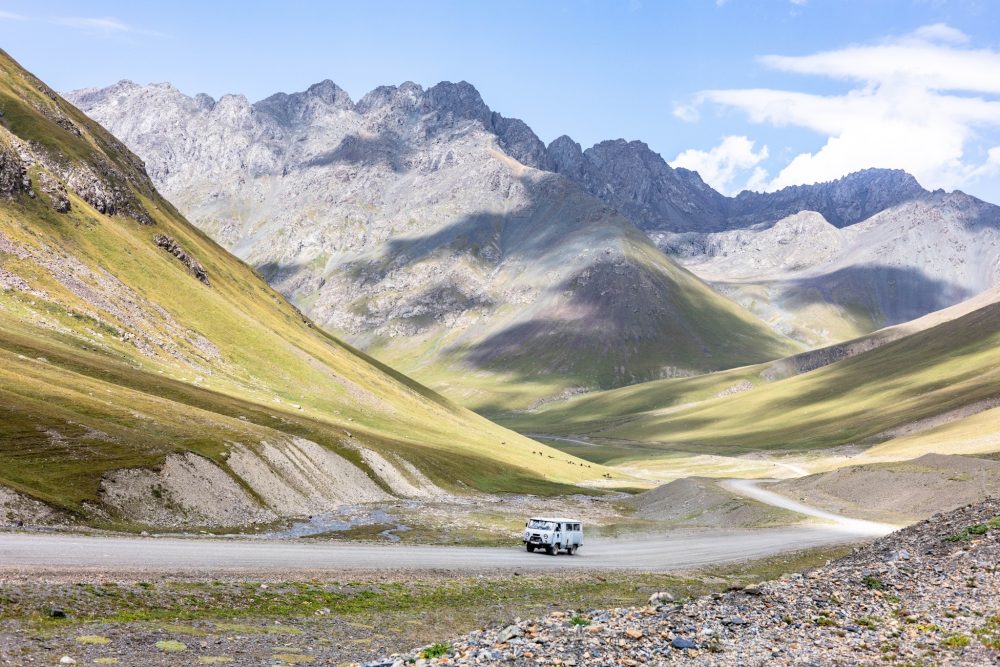
The first part of our journey, travelling by minibus from Bishkek to Karakol, was much the same as on our previous expeditions to the Sary-Jaz Range.
The big difference was the development of new roads.
Depending on the progress of the construction work, sometimes we travelled along the northern shore of Lake Issyk-Kul and sometimes along the southern shore.
We never quite knew which way we would go!
Karakol is a lovely place and our last real contact with civilisation before heading into the mountains. It's also our last opportunity to enjoy a delicious dinner of lamb shashlyk.
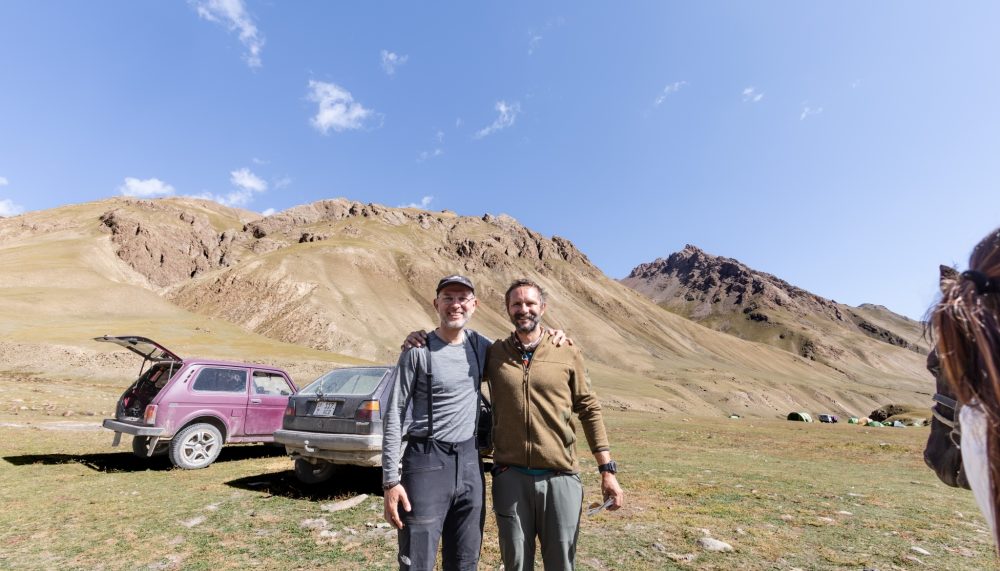
A few days later, I woke from a short nap in the back of our Gaz-66, the wonderful old Soviet four-wheel-drive lorry that carries us into the mountains.
It was a hot day.
Looking out of the window, I could see excavators, bulldozers and enormous Chinese trucks building a new road.
At first, I didn't recognise where we were.
Then I spotted a familiar granite pinnacle.
We were driving through what we'd called “Little Switzerland”!
Two years earlier, we'd camped in this beautiful green valley, surrounded by pine trees, with just a few yurts, cows, sheep and a small dirt road.
We'd given it the name Little Switzerland because it was such a lovely, unspoilt place.
Now it looked completely different.
The transformation made me think about the changes taking place in Kyrgyzstan and the country's position between Russian, Chinese and Western interests.
The speed of the road construction was extraordinary, although I wondered what these developments might eventually mean for the remote valleys we'd come to know.
Chapter 3: Back to Adventure in the Wilderness
Fortunately, one of the wonderful things about our expeditions is that we always manage to leave civilisation behind and find our way into some truly remote and beautiful places.
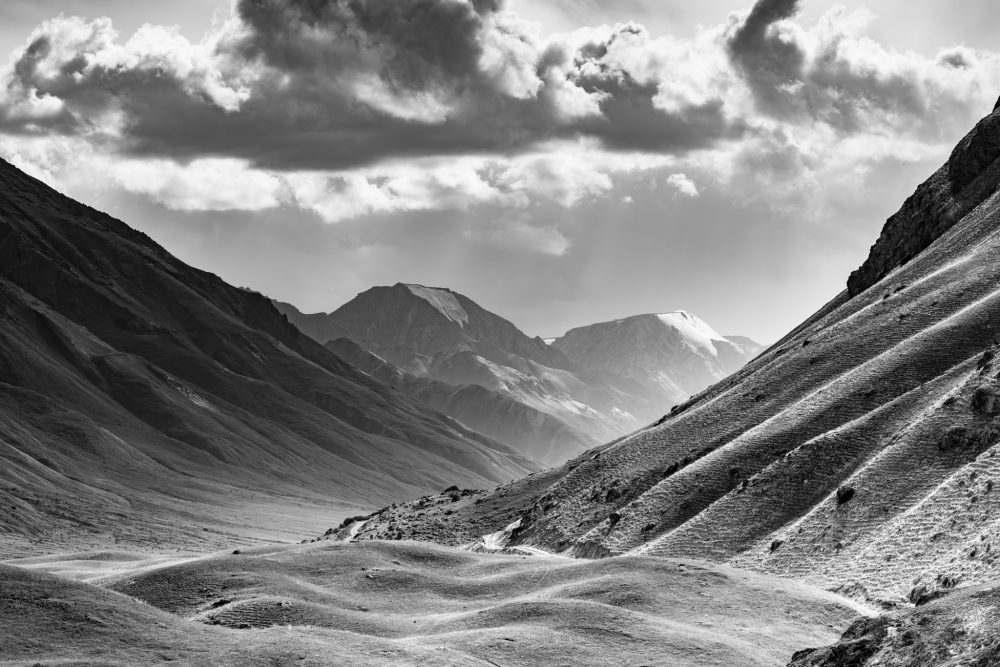
This year, our destination was the Oroi Suu Valley, where the river separates the Terskey Range to the north from the Kuylu-Too Range to the south.
What a place!
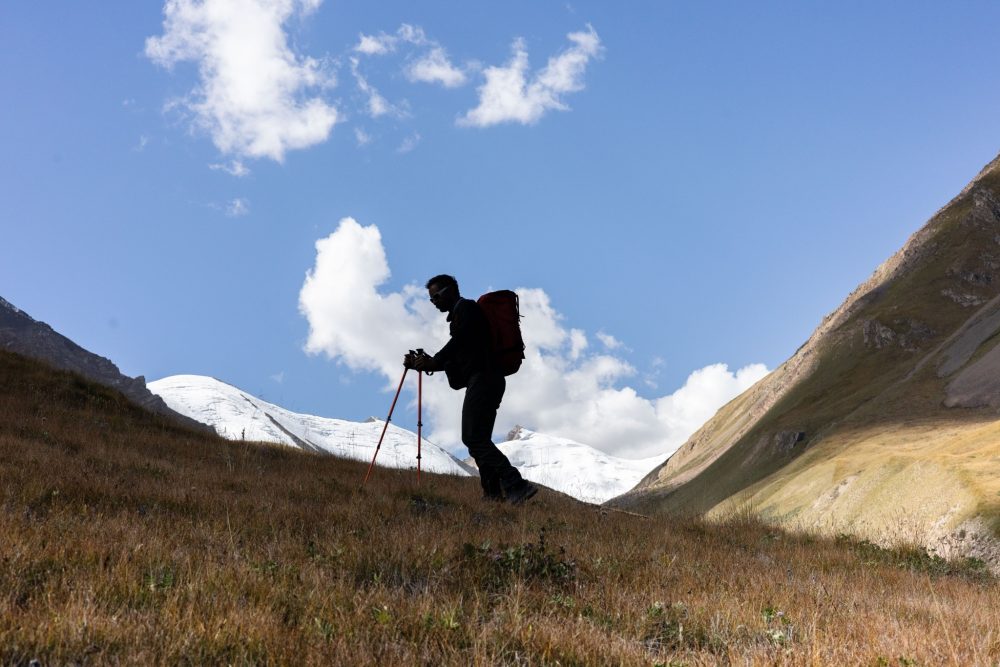
Pine trees lined one side of the valley, beautiful compact brown basalt walls rose above the river, and several smaller valleys disappeared towards distant, snow-covered peaks.
We travelled along the valley in our Gaz-66 for around two hours, passing only a couple of yurt camps.
We were almost at our planned base camp when we encountered our first big problem.
The bridge had gone!
A huge flood had recently destroyed it, leaving us on the wrong side of the river.
This is where expedition leadership becomes interesting.
Andreji, our other Mountain Guide, was helping translate between English and Russian.
“Andreji, could you please ask Oscar if he can drive the Gaz-66 across the river?”
Oscar didn't need a translation.
His answer was a very definite no!
We were stuck.
There was no obvious way to reach our planned base camp, and we certainly weren't going to persuade Oscar to drive his lorry into the river.
So out came the map.
After studying the surrounding valleys, I realised there might be another possibility: a suitable place for base camp near the junction with the previous valley on our left.
A change of plan, but perhaps not such a bad one.
Sometimes solving an unexpected problem turns out to be one of the best ways to bring an expedition team together.
Chapter 4: Base Camp and Team Building
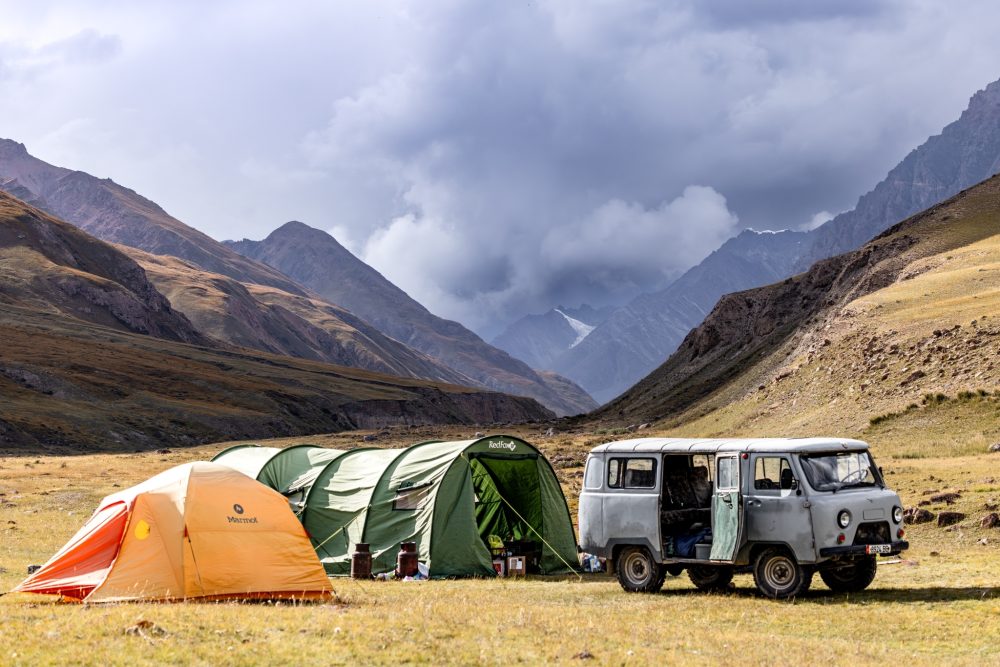
We arrived at our new base camp location and began setting everything up.
What impressed me immediately was how naturally everyone took responsibility for something.
Nobody needed much encouragement. People simply found jobs and got on with them.
It was a lovely moment, and one that made me realise I could trust the team to help with the many responsibilities of running an expedition.
Perhaps it's time to introduce everyone.
First, Harry and Jason, our two Kyrgyzstan expedition veterans.
Then Matthieu from France, Alan, Martin from Denmark and Adam, the youngest member of the team.
We also had Svetlana, our wonderful cook, Alexi, our other Mountain Guide, and Valera, our driver.
Before long, our little village had taken shape.
Nine tents, a large mess tent and, of course, the all-important toilet tent!
Our nearest neighbours were a Kyrgyz family living around 100 metres away.
I've always thought base camp is one of the great institutions of an expedition.
You spend your days climbing mountains, exploring valleys and looking down from distant summits.
And somewhere far below, you can see those little tents.
Home!
A safe, familiar place to return to after a long day in the mountains.
It's amazing how quickly a collection of tents in the wilderness can begin to feel like home.
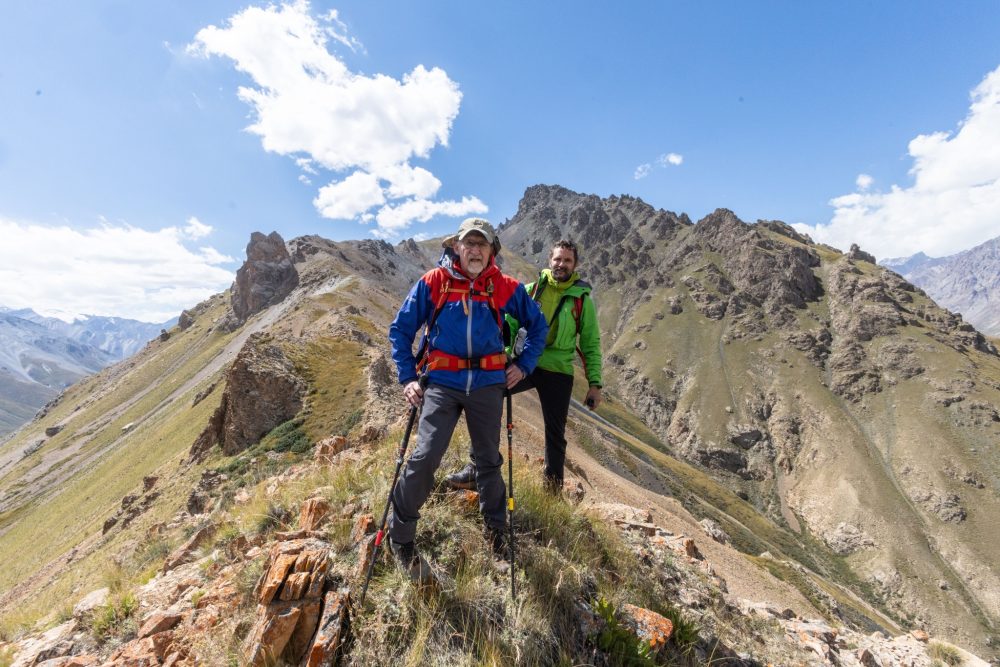
Chapter 5: New Summits
And then, of course, there were the mountains!
During the expedition, we climbed five previously unclimbed summits.
Matthieu was particularly good at keeping detailed notes of our climbs, so I've used some of his observations here, together with the heights of the peaks.
We also wanted to respect the names already used by the local Kyrgyz people.
Our neighbour Nurlan, whose family had lived in the valley for generations, helped us understand some of the traditional names.
Peak 1 – 3,486m
Our first summit was a trekking peak that we all climbed together.
A lovely way to begin the expedition and share our first summit as a team.
Peak 2 – 3,802m: The Dome
Initially, I'd suggested calling this Red Rock Peak, or Kizil Tash.
But Nurlan told us that the mountain was already known locally as Kara Zoo.
This became one of my favourite summits of the expedition, partly because of its distinctive shape, but especially because the whole team climbed it together.
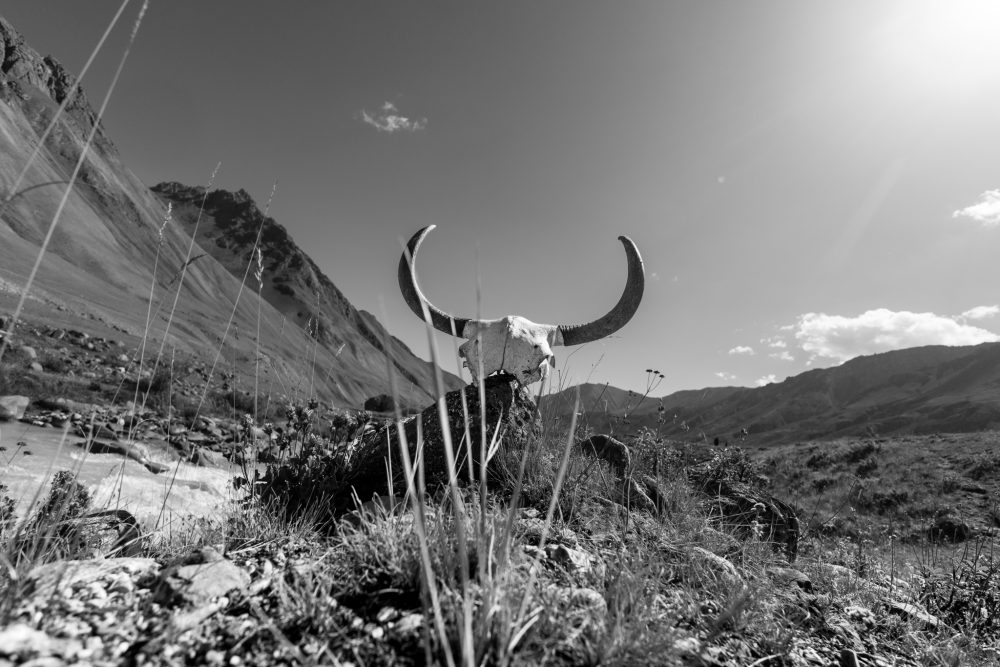
Peak 3 – 4,402m: White Yak Peak
We first noticed this beautiful snowy mountain from the open valley where the yaks were grazing.
I suggested the name White Yak Peak, or Ak Topoz.
For me, this was probably the greatest mountaineering achievement of the expedition.
From below, the peak appeared to be covered in ice, but I managed to find a route through scree and along a scrambling ridge that allowed us to avoid the icy terrain.
It was a long climb, involving around 1,400 metres of ascent and seven hours from base camp.
A fantastic mountain adventure!
Peak 4 – 4,395m: Black Yak Peak
Standing close to White Yak Peak, this summit appeared almost like its twin.
For obvious reasons, I suggested Black Yak Peak, or Kara Topoz.
Peak 5 – 4,001m: Shark Tooth
Another wonderfully shaped mountain.
I'd initially suggested Snow Leopard Peak, or Ilbirsin Tishi, but Nurlan explained that it was already known locally as Kalmak Ochock.
Five summits, each with its own character and story.
And what made them particularly special was knowing that we were exploring mountains that, as far as we knew, had never previously been climbed.
That's a rare and wonderful feeling.
Chapter 6: A Night Beneath the Kyrgyz Full Moon
This was one of the most beautiful nights of my life.
After climbing the big 4,402-metre peak with Alan, Adam and Matthieu, I needed to organise the logistics for the following day.
The mountain stood around seven kilometres from base camp, beyond a long, relatively easy walk along the valley.
One team was returning to base camp, while another would come up the valley the following morning.
So I decided to stay behind and camp alone.
Seven kilometres from base camp.
And around 100 kilometres from civilisation.
I pitched my little tent, cooked some dinner and, before climbing into my sleeping bag, went for a walk in the darkness.
There was complete silence.
Not a sound.
Then the full moon began to rise above the mountains.
I was completely alone in this enormous wilderness.
It was one of those moments that stays with you forever.
The following morning, Jason and Harry arrived at around 11am. Martin had been feeling unwell and remained at base camp.
Jason has been joining our Virgin Summits Expeditions for more than ten years.
And Harry, who has shared all five of my Kyrgyzstan expeditions, had turned 79 this year!
He's still remarkably fit, and his kind, gentle personality has always had such a positive influence on the groups.
As we stood talking near my little campsite, Jason pointed towards some holes in the hillside.
“Tom, do you realise those aren't marmot holes?”
I looked at him.
“I think that's a bear cave,” he continued.
“And that one too!”
So there I was.
I'd spent one of the most peaceful and beautiful nights of my life camping beside what appeared to be a collection of bear dens!
Perhaps it was just as well I hadn't noticed them the night before.
Chapter 7: Our Kyrgyz Family
Our neighbours were never far away from base camp.
Nurlan, the father, Diran, the mother, and their daughters Janay, Jangelei and Feruza.
Over the course of the expedition, we gradually got to know them.
Their way of life was very different from ours.
At first glance, someone arriving from Western Europe might assume that a family living in such a remote valley had very little.
But that would be a mistake.
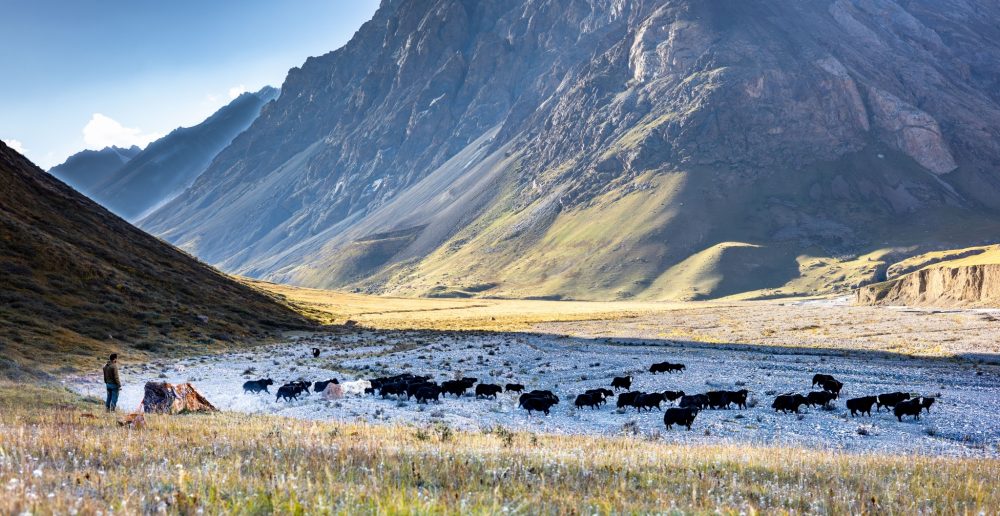
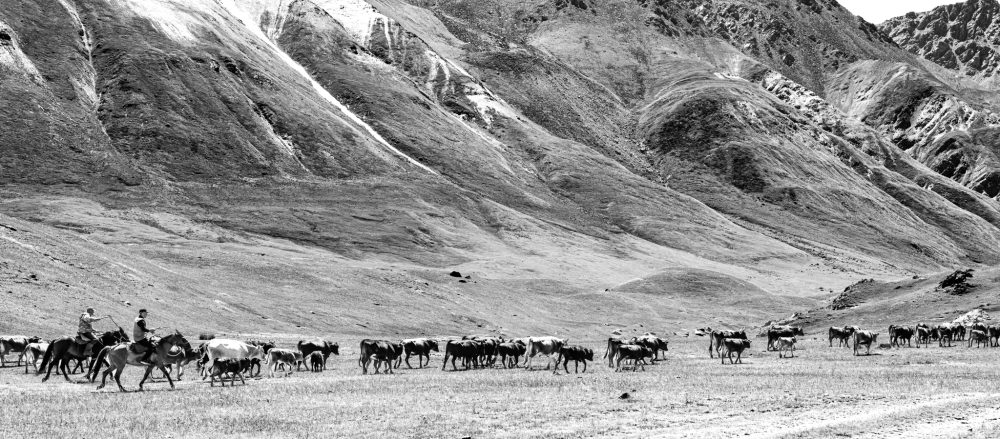
In this part of Kyrgyzstan, livestock represents an important form of wealth, and Nurlan's family owned around 200 yaks.
They had a rich connection with the land and a way of life that had been passed down through generations.
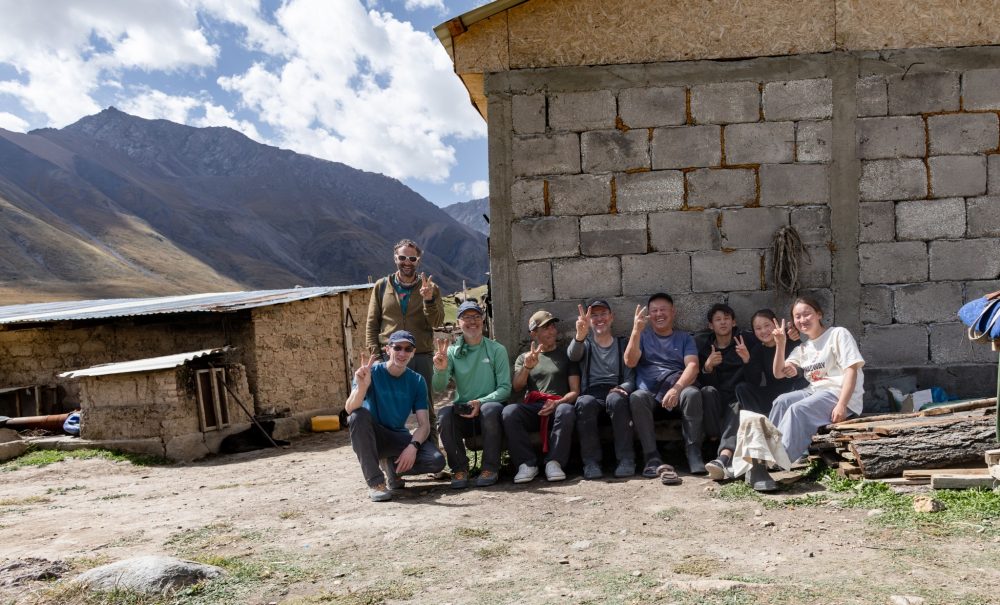
On our final day before returning to Karakol, the whole expedition team decided to spend some time with the family.
It became a wonderful cultural day.
We shared both lunch and dinner with them, enjoyed their hospitality and even had the chance to ride their horses.
It was a lovely way to finish our time in the valley.
On the morning we were leaving, Nurlan came running over to say goodbye.
Then he surprised me with an unusual request.
Could we leave him the rubbish we'd collected during our stay?
Five enormous bags!
He explained that some of the waste could be burned to provide heat.
It was another reminder of how differently resources can be valued and used in such remote places, even if the idea of burning rubbish was rather uncomfortable from our perspective.
Living alongside the family, even for a short time, had given us a glimpse into a world very different from our own.
And those encounters are such an important part of travelling and exploring.
Chapter 8: Swimming Beneath the Glaciated Peaks
After all the climbing, long mountain days, cold nights in tents and unexpected adventures, it was finally time to head back towards civilisation.
But Kyrgyzstan still had one last wonderful memory waiting for us.
A swim in Lake Issyk-Kul!
After weeks of expedition life, there was something rather special about swimming in the enormous lake while looking towards the distant glaciated mountains.
All those peaks rising above the water.
All those adventures now behind us.
And a comfortable night in a yurt camp to finish the journey.
Not a bad way to end an expedition!
Five new summits, a fantastic team, unexpected problems, wonderful people and memories that will stay with me for a very long time.
Goodbye, Kyrgyzstan!
Until next time.
Tom – ISM Mountain Guide
Many thanks again to Jason Sheldrake for the amazing images we have each expedition which really capture each area we visit and explore.