![]() |
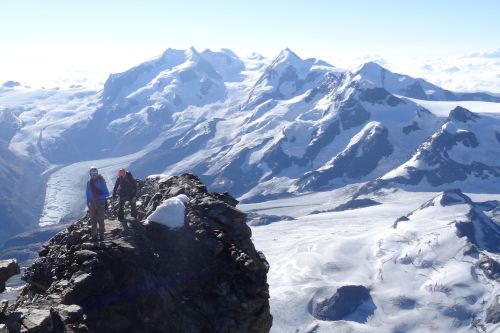
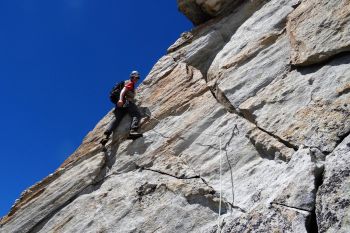
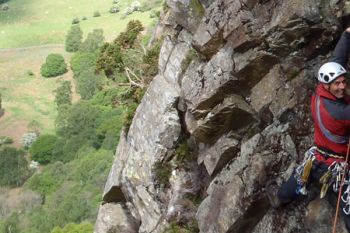
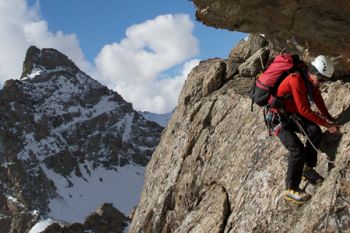
Via Ferrata are an ideal way for less experienced people to enjoy some spectacular situations in the mountains – situations which would normally only be accessible to expert climbers and mountaineers. For the keen walker with a head for heights they make an ideal initiation to the vertical mountain world, without the need for previous climbing experience. Complete safety is provided by our guide, and with the right equipment and instruction you will soon find yourself tackling some sensational ascents!
Via ferrata ('iron roads' or 'iron ways') were first developed during the First World War in the Italian Dolomites to move troops swiftly around the mountains. The first one to be built in Switzerland, on the Tellistock near Meiringen, was also built by the army, but more recent ones have been constructed by mountain guides. Swiss via ferratas can be more 'sporting' than their counterparts in Italy, being quite strenuous, exposed, and sometimes more demanding in terms of climbing skills. Leysin is an excellent starting point for our course, with its own exciting via ferrata up the impressive south west face of the Tour d’Aï. There are several others in the region: Diablerets, Rougemont (near Gstaad), Champery, and Moleson (near Gruyeres). On this course we start with some of these local ascents, working up to the most challenging of them: the imposing west face of the Rubli above Gstaad. We then drive further afield to tackle two famous Swiss via ferrata: the historic and strenuous Tellistock, which we will do after a night in the beautiful mountain hut (the Telli hut) at its base; and the Eiger via ferrata, which climbs the Rotstock on the right side of the awesome north face. There are many other great via ferrata ascents in the Swiss Valais - such as on the sheer cliffs of Evolene and the high peak of the Jagihorn in the Saas valley. As well as taking you to the best of these beautiful locations, our guide will instruct you in all important techniques (and general mountain skills) so that by the end of the course you should be confident enough to tackle any Via Ferrata in safety. Typical course itinerary:
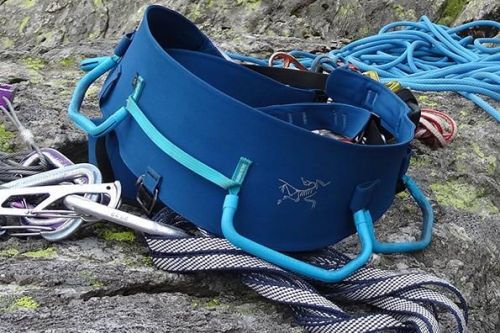
Day 1. The course starts at the Grand Chalet Hotel in Leysin at 7.00pm on Sunday evening for a meeting with your guide and a course briefing. Day 2. Leysin. We start off by equipping and familiarising you with via ferrata equipment: harness, helmet, dynamic self belaying devices. Our first objective is the Tour d’Aï above Leysin - a spectacular limestone tower overlooking Lake Geneva. We take the cable car up to the Berneuse and walk (40 mins) to the foot of the via ferrata. Your guide will demonstrate the correct technique and help you wherever necessary, as we make our ascent up the exposed SW face of the Tour, finishing close to the summit. On the way down we will stop off to teach the basics of abseiling technique and make a descent on the lower cliffs. We then walk back down to the hotel, with a refreshment stop in the mountain café on the way. Day 3. Diablerets. A 30 min drive takes us to the Col de Pillon, from where we take the lift to the mid station of Diablerets and walk down to the mountain hut. Here we get geared up and scramble down a short couloir to the start of the via ferrata. This is more of a traverse than an ascent, but is very spectacular and has some quite steep sections. From the top we walk back around to the hut for a picnic and drink and then descend by cable car to the Col de Pillon again. The afternoon’s activity is an exciting short via ferrata on the lower cliffs, only a short distance up from the col. Although short this is very athletic, passing behind a waterfall and finishing with a Tyrolean (rope) traverse.
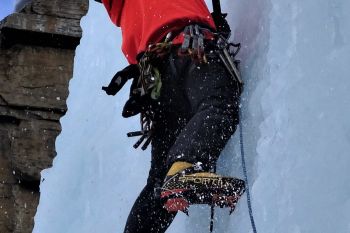
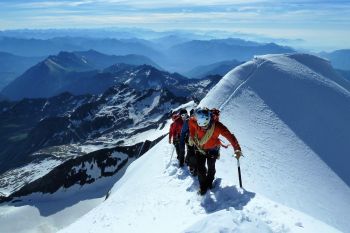
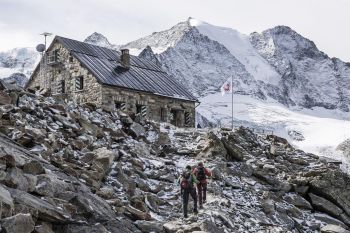
Day 4. Rougemont. This is the most technically difficult via ferrata we attempt - but by now you should be ready for it! There is also an easier alternative route, if necessary. This ascent is on a peak called the Rubli, a notable summit above Gstaad and frequently covered with edelweiss. The Vidamanette lift takes us up to the restaurant at the top of this peak and then a short walk leads us to our choice of ascents. Those with strong arms and a good head take the west face of Rubli. Ether way leads to the summit cross and we then follow an easy route back to the lift. We will drive through to Meiringen to walk up (1 hour) through the beautiful alpages to the Tally Hut, a little Swiss Alpine Club hut set directly beneath the cliffs of the Tellistock. We will spend the night here. Day 5. Tellistock. This is a superb mountain day, climbing the peak and then traversing to Engstlingenalp. The whole trip takes 6-7 hours. The via Ferrata takes an amazing route up the huge cliff above the hut by connecting and following a series of ledges, with stunning views and situations. From the summit ridge we descend a steep footpath, and traverse around to Engstlingenalp, a beautiful old hotel next to a lake. We will take a refreshment stop here before the bus takes us back down the valley to our transport. We then drive the short distance to Grindlewald, below the Eiger, staying in a hotel here overnight.
Day 6. Eiger. We take an early train up to Alpiglen, a small hamlet situated directly beneath the Eiger North Wall. The famous 'Eiger Trail' is followed up towards the face, giving us a close-up view of this vertical mile of rock and ice. At the far right side of the wall, the Eiger Via Ferrata winds its way up beside a rock formation known as the Rotstock. After some steep ladders we reach a little door into the mountain, a peep-hole into the eerie tunnel of the Jungfraujoch railway. Above this, a stairway of carved-out steps, used by construction workers a century ago, leads up through an impressive amphitheatre to the final rock tower of the Rotstock. The views of the Eiger and across the North Face are superb. After lunching on the Rotstock we descend easy rocks (with some cables) then a well-made track down to Kleine Scheidegg, from where the train takes us back to Grindlewald and our transport back to Leysin. Day 7. Breakfast at the Hotel is included before your departure on Saturday morning. |
|
| |
| |
||||||||||||||||||||||||||||||||||||||||||||||||||||||||||||||||||||||||||||||||||||||||||||||||||||||||||||||||||||||||||||||||||||||||||||||||||
|
||||||||||||||||||||||||||||||||||||||||||||||||||||||||||||||||||||||||||||||||||||||||||||||||||||||||||||||||||||||||||||||||||||||||||||||||||||||||
Home | About ISM | Book a Course | News & Reports | Sitemap | Links | Contact ISM |
|||